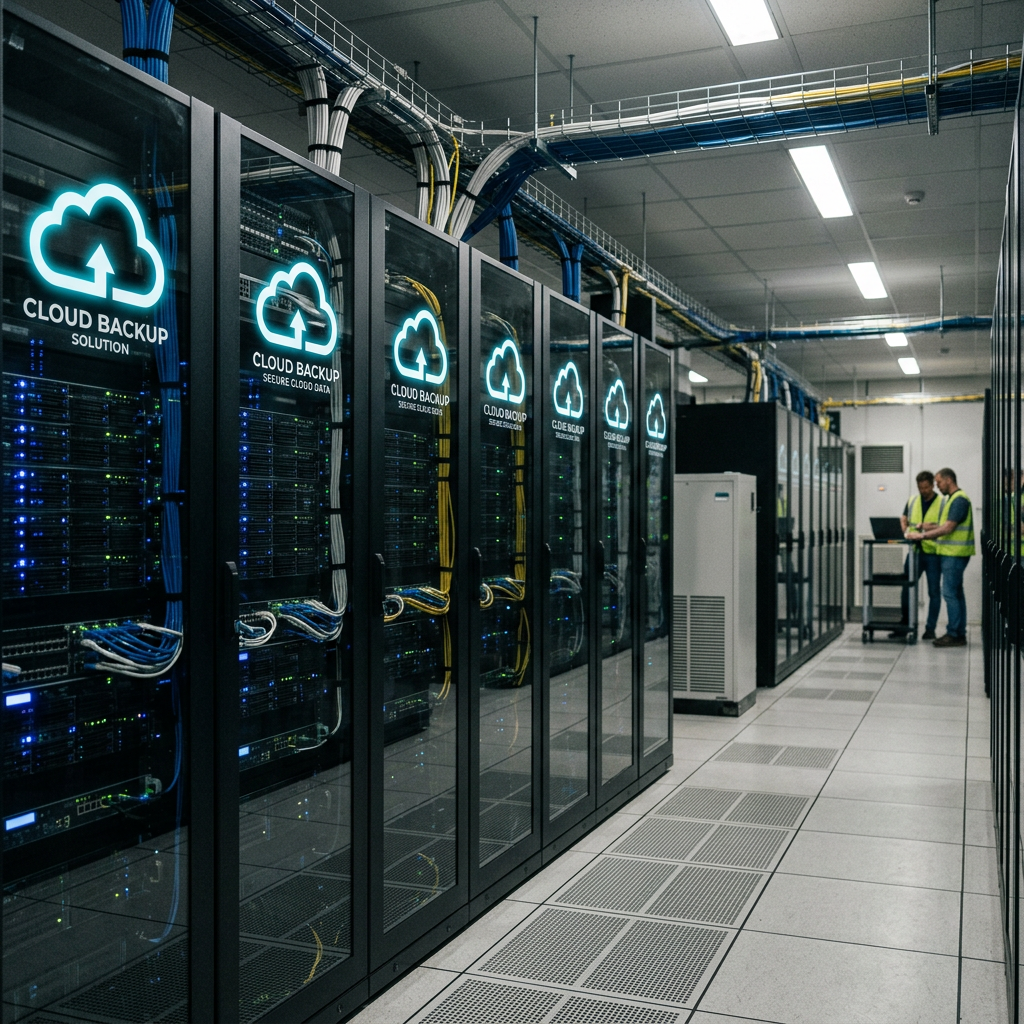

If you only remember one rule about backing up your business’s data, make it this one: 3-2-1.
It’s simple enough to explain in a sentence, and most businesses that lose important data for good weren’t following it. Not because they didn’t care — because “we have backups” and “we have backups that would actually save us” turn out to be two very different things.
What 3-2-1 Actually Means
3 copies of your data. That’s the original, plus two backups. If something happens to one copy, you’re not down to zero — you still have options.
2 different types of storage. This is the part people get wrong most often. Having three copies doesn’t help much if all three live on the same external hard drive, or the same server, in the same room. That’s not three layers of protection — it’s one point of failure, copied three times. Spreading your data across different types of storage (for example, a local backup and a cloud backup) means one type of failure doesn’t take everything down at once.
1 copy stored offsite. Somewhere physically separate from your main location. This is the part that saves businesses during floods, fires, theft, and storms — because if something happens to your building, an offsite copy is the one that isn’t in the building when it happens.
Why This Matters More Than It Sounds Like It Should
Most data loss doesn’t look like a movie. It’s not a dramatic hacking scene. It’s a hard drive that fails on its own timeline, with no warning. It’s a laptop that gets stolen out of a car. It’s a storm that floods an office, or a small electrical fire that takes out a server closet.
None of those scenarios care whether you “meant to” back things up. And a single backup sitting in the same building as your main system doesn’t actually protect you from most of these situations — it’s just a second copy of the same risk, sitting a few feet away.
The Question Worth Asking Yourself
Here’s a simple gut check: could you answer, right now, exactly how many copies of your business’s data exist, what they’re stored on, and whether any of them are actually offsite?
If the honest answer is “I’m not totally sure,” you’re not alone — that’s the position most businesses are in before they think this through for the first time. The good news is that fixing it doesn’t require an expensive overhaul or a complicated new system. It just requires actually setting it up once, correctly, instead of assuming “we have backups” already covers you.
The Bottom Line
The 3-2-1 rule isn’t a technical best practice reserved for large companies with dedicated IT departments. It’s a basic safety net that any business — a construction company, an HVAC shop, a manufacturer, a plumbing business, an electrical contractor — can and should have in place.
The businesses that recover quickly from a bad day, whether that’s a dead hard drive or a hurricane, usually aren’t the lucky ones. They’re the ones who set this up before they needed it.
CSI secures, monitors, and supports your IT so you can focus on growth. Serving Central & Southwest Florida. Call +1‑844‑340‑5060 or email [email protected]