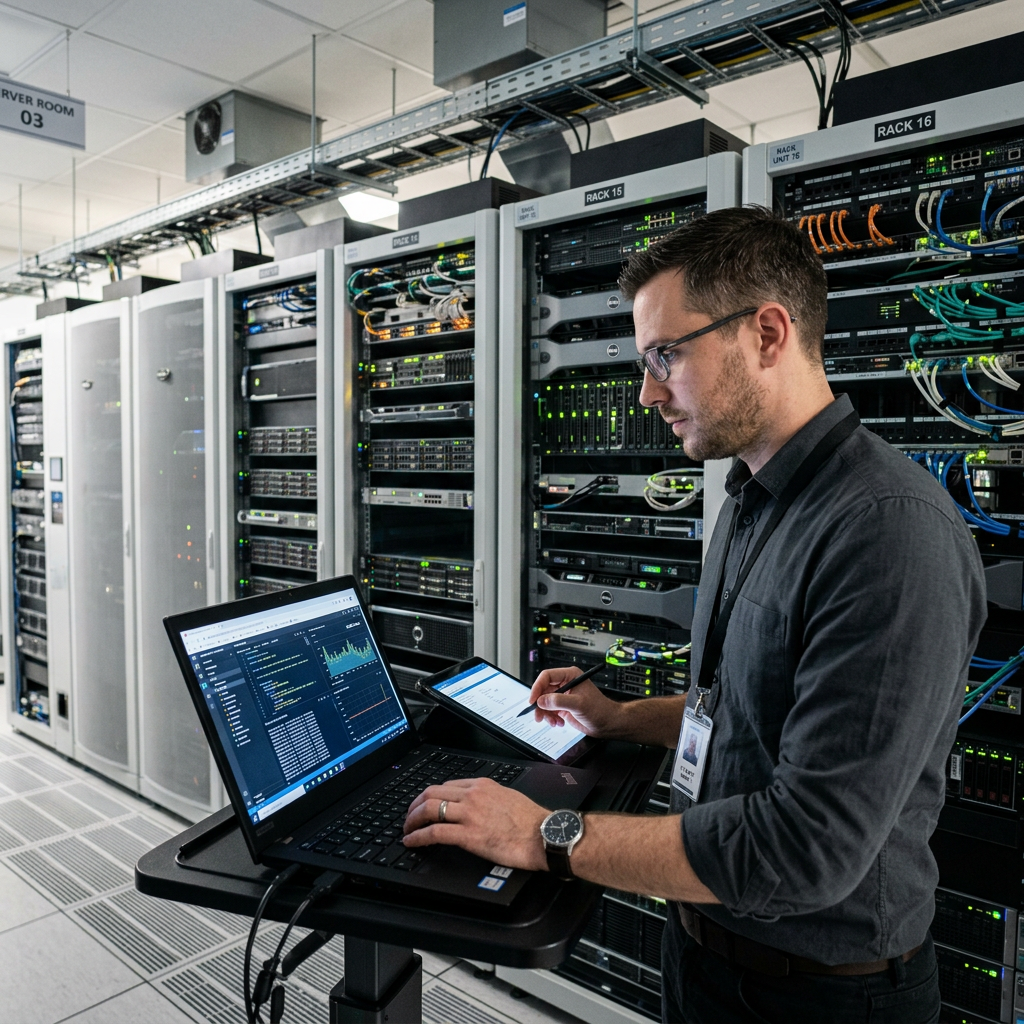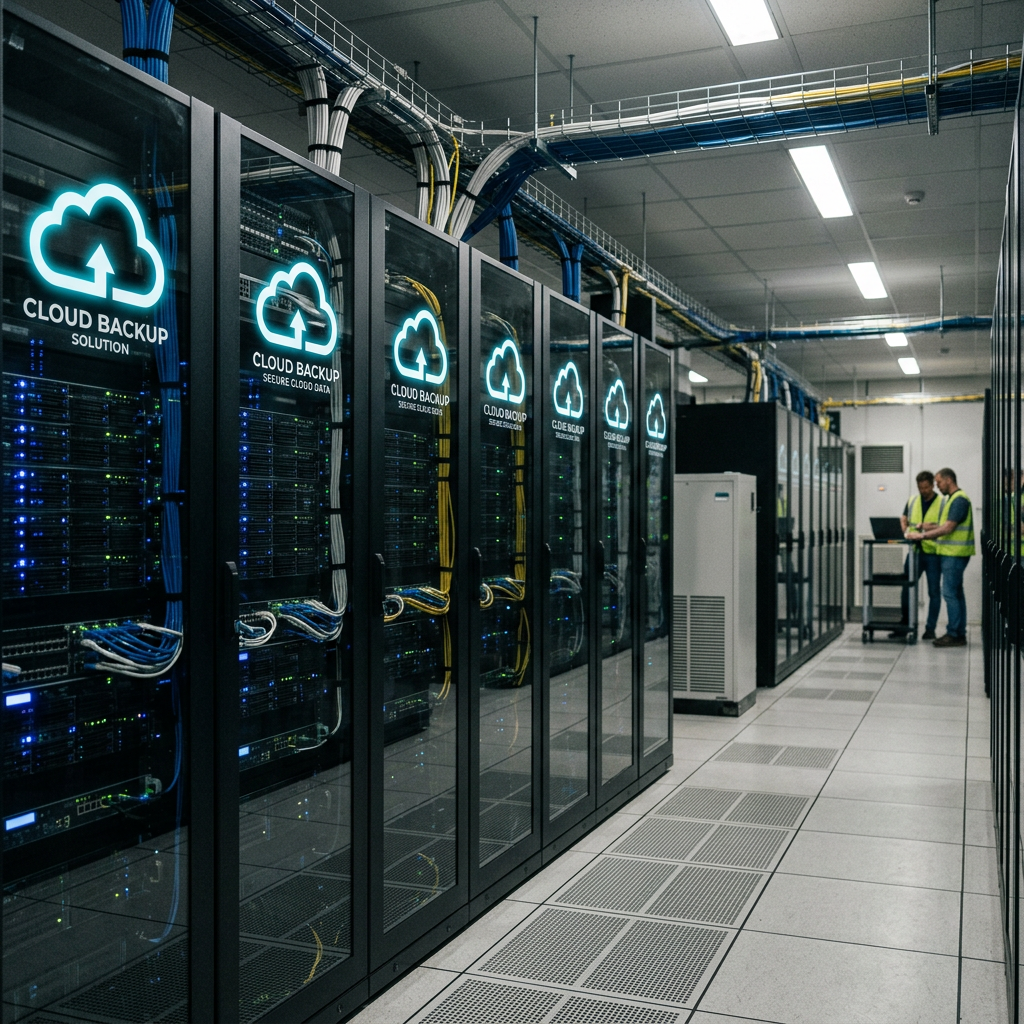

Ask most manufacturers about their IT setup, and you’ll usually hear about one of two things: security (“we have antivirus and a firewall”) or backup (“we back things up to a drive”). Rarely both, and almost never as two parts of the same plan.
That’s worth fixing, because they do two very different jobs — and a manufacturer really needs both to be properly protected.
Two Different Jobs
Security is what keeps problems out in the first place. This includes things like filtering phishing emails before they land in an inbox, controlling who has access to which systems, keeping software updated so known vulnerabilities get closed, and watching for unusual activity across your network. Security is your first line of defense — the goal is to stop a bad day before it starts.
Backup is what saves you when something gets through anyway. No security system, no matter how good, catches everything, every time. A backup means that even when something does go wrong — a hard drive fails, ransomware locks up a system, an employee accidentally deletes an important file — you still have a clean, usable copy to restore from.
Security without backup means you’re only protected until the one time something slips through. Backup without security means you’re likely to need that backup a lot more often than you should. You need both, working together.
What This Actually Protects for a Manufacturer
Your production schedule. If the system managing your production schedule goes down, a real backup means you’re restoring it and getting back to work — not rebuilding it from memory, paper notes, or whatever anyone can piece together.
Your design files and proprietary processes. CAD files, product specs, and years of engineering work represent real competitive advantage. Without a backup, that work doesn’t come back just because you need it to. It’s simply gone if the one system it lived on fails.
Your customer and supplier records. Order history, contracts, and communication records tell the story of relationships that took years to build. A backup means a system failure doesn’t also mean starting those relationships over from scratch, hoping people remember the details you no longer have.
Your recovery timeline if the worst happens. This is where security and backup meet most directly. Manufacturers with backups that stayed clean and untouched during an incident typically recover significantly faster than those whose backups were compromised right along with everything else — often the difference between a few days of disruption and several weeks of it. For a manufacturer running tight schedules and thin margins, that gap can be the difference between a rough month and losing customers permanently.
The Simple Way to Think About It
Security tries to stop the bad day from happening. Backup makes sure that if it happens anyway, it’s a bad day — not a bad year.
Neither one is optional, and neither one is a substitute for the other. A manufacturer that only invests in one is still exposed on the side they skipped. The plants that recover quickly and keep running aren’t the ones with the most expensive individual tools — they’re the ones where both pieces are actually in place, working together, before they’re needed.
Not sure where your business currently stands on either front?
CSI secures, monitors, and supports your IT so you can focus on growth. Serving Central & Southwest Florida. Call +1‑844‑340‑5060 or email [email protected]