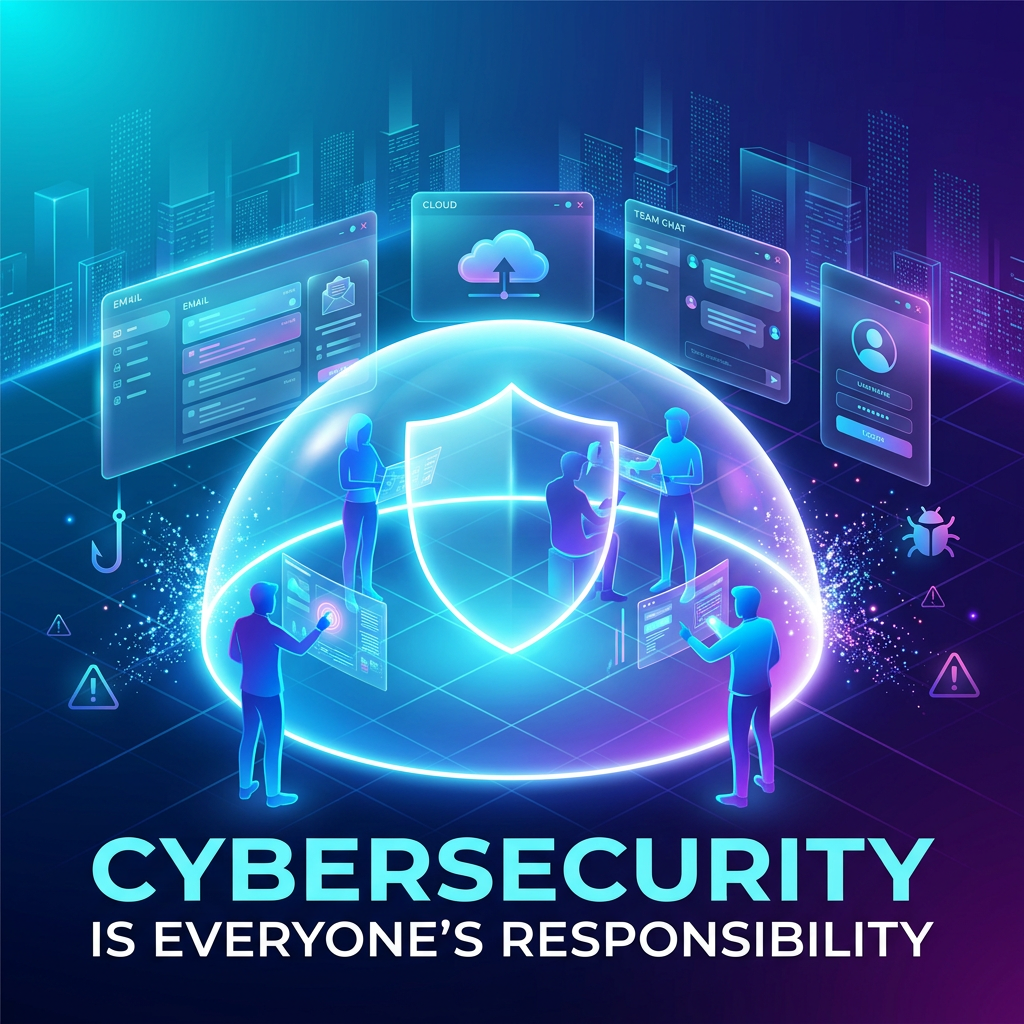
Many organizations still treat cybersecurity as something handled exclusively by the IT department. But cybersecurity affects every part of the business, finance, HR, operations, leadership, and every employee who uses email, shared files, and cloud apps.
For small and mid-sized businesses (SMBs), that reality is even more important. You may not have a large security team, but you still face the same threats as bigger organizations: phishing, payment fraud, ransomware, accidental data loss, and compliance pressure. The good news is that you don’t need a massive budget to reduce risk. You need the right habits, the right policies, and a clear understanding of where your biggest gaps are.
Why cybersecurity is everyone’s responsibility
Cybersecurity problems often show up as business problems:
- Finance: A fake vendor email asks for a bank detail change. One payment goes to the wrong account.
- HR: Sensitive employee documents are shared with the wrong permissions.
- Sales/Operations: A compromised inbox is used to impersonate staff and request urgent transfers.
- Leadership: A single compromised account creates reputational damage, downtime, and client trust issues.
Most real-world incidents start with a normal moment: someone is busy, an email looks believable, and urgency pushes a quick decision. Technology matters, but people and process determine whether an attack succeeds.
The most common threats SMBs face (in plain language)
1) Phishing and impersonation
Phishing isn’t just “obvious spam” anymore. Many messages look like real vendors, clients, or coworkers. The goal is usually one of two things:
- Get someone to click (to steal credentials or install malware)
- Get someone to pay (invoice fraud / business email compromise)
2) Account takeover
If an attacker gets access to a mailbox or cloud login, they can:
- Search for invoices and payment threads
- Set sneaky mailbox rules to hide messages
- Access shared files and send believable emails internally
3) Ransomware and operational disruption
Ransomware isn’t only a device problem. It can disrupt work by impacting identity, access, and the systems teams rely on daily. Recovery can be slow if backups, permissions, and response plans aren’t ready.
4) Accidental data loss and oversharing
Not every incident is malicious. Deleted folders, overwritten files, and “anyone with the link” sharing can cause serious exposure, especially when sensitive client or employee data is involved.
What “cyber readiness” actually looks like for an SMB
Cybersecurity readiness isn’t about buying the most tools. It’s about answering practical questions like:
- Can we spot suspicious emails fast, and do people know what to do with them?
- Do we verify payment changes (bank details, invoices, gift card requests) outside email?
- Do we use MFA everywhere, and do we control who has admin access?
- If something goes wrong, can we restore critical data quickly?
- Do we have policies people can follow (and will actually follow)?
- Could we prove our controls in an audit or during an insurance review?
If any of those answers are unclear, that’s not failure, it’s simply your starting point.
The simplest improvement you can make: the “Pause + Verify” habit
If you only implement one behavior change company-wide, make it this:
For any request involving money, credentials, or access changes pause and verify using a second method.
Examples of “second methods”:
- Call a known phone number (not the number in the email)
- Confirm over an internal chat channel
- Ask the requestor in person if possible
This one habit prevents a large percentage of payment fraud and impersonation incidents.
Building awareness is the first step toward resilience
Security awareness isn’t about scaring people or blaming them. It’s about giving your team simple, repeatable decision rules that reduce risk:
- How to spot common red flags
- When to slow down
- Where to report suspicious messages
- What to do if credentials may have been exposed
When people understand the “why,” they’re more likely to follow the process, even when things feel urgent.
We can review your scorecard outcomes and recommend the most practical next steps based on your size, industry, and risk profile.
CSI secures, monitors, and supports your IT so you can focus on growth. Serving Central & Southwest Florida. Call +1‑844‑340‑5060 or email [email protected]